
Using AI /
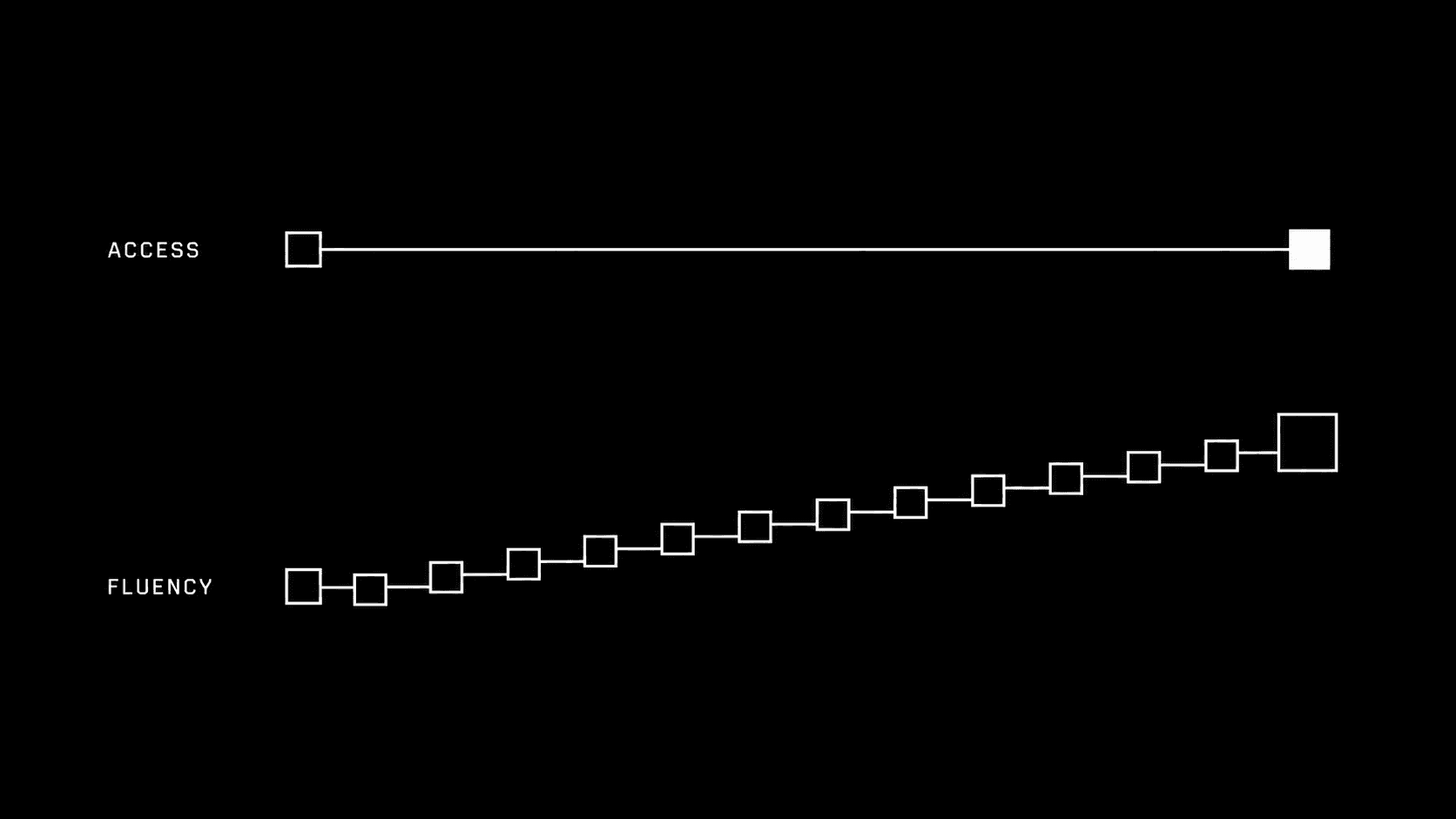
AI is easy to try. Fluency is not.
Ask a strong model to make a website, write a function or analyse a spreadsheet. Something polished appears seconds later.
That speed creates a dangerous illusion: because the first result came easily, the skill can wait.
It cannot.
This is not an investment tip
People love asking what they should have bought ten years ago. Bitcoin. Nvidia. Amazon.
AI fluency is different. You cannot buy it and leave it sitting in an account. It compounds only when you use models on real work.
Models are improving. Interfaces are getting simpler. That is not a reason to wait. Easier tools also increase what experienced users can do.
The gap will not be between people who can and cannot open an AI chat. It will be between those who can turn a messy idea into a defined job, provide the right context, inspect the result, recover when it goes wrong and build something another person can trust.
One-shot is the beginning
Anyone can ask a model to generate a website. The real learning starts after the first answer.
Does the code run? Is the structure maintainable? Did the model invent a fact? What happens when an input is missing? Can another person understand the result? Can you change it safely next month?
These questions require judgement. Repeated use develops it.
A one-shot prototype can feel like mastery because the output looks finished. Often it is only the first draft of the thinking.
Learn on real work
If most of your work passes through a laptop, you do not need to become a software engineer. You should learn how to direct models and software towards useful outcomes.
Open Codex or Claude Code against a real project. Build a small tool. Automate a recurring report. Restructure a folder of documents. Ship a simple website. Read the changes, run the tests and fix what breaks.
Spend a few focused hours each week making something work.
Finished projects leave more than an output. They leave patterns, vocabulary and a better sense of what these systems can and cannot do. The next project starts from there.
That is the compounding advantage.
Learners inherit the change
There is an old line, usually attributed to Eric Hoffer:
In times of change, learners inherit the earth, while the learned find themselves beautifully equipped to deal with a world that no longer exists.
No one knows the exact shape of white-collar work in two years. We do know that occasional familiarity is different from working fluency.
The people learning now are building judgement while the cost of experimentation is low.
The rule
Do not wait until AI fluency becomes a requirement of your job.
The interface will get easier. The judgement will still have to be earned.